
















PanosSPICE



Product Details
PanosSPICE is a proprietary, self-developed True-SPICE simulation platform by Julin, specifically engineered for IC design and IP verification scenarios requiring Golden-level device precision.
Within the IC design chain, PanosSPICE occupies the most foundational and critical position—providing transistor-level physical ground truth. It serves as the accuracy bedrock for all upper-layer simulation, verification, and sign-off processes. From Foundry process modeling to design house IP sign-off, and from advanced logic nodes to third-generation power semiconductors, PanosSPICE provides consistent high-precision coverage across all processes and scenarios.
Industry Recognition: Validated by Tier-1 customers as a Sign-off grade tool, achieving the industry’s Golden standard for accuracy.
Key Highlights:
1. Native Support for Full-Process Device Models
Deep coverage of mainstream CMOS, FinFET, SOI, and BJT processes. Featuring proprietary Level 90/91 physical device models for SiC & GaN (third-generation semiconductors), offering a single platform for everything from advanced logic to power electronics.
2. Signoff Grade Simulation Engine
A unified SPICE model architecture supporting a comprehensive suite of industrial-grade analyses, including DC, AC, Transient, Noise, and Monte-Carlo, all rigorously verified by leading industry players.
3. Fully Automated IP Verification
Combines Parametric Sweeps with Monte-Carlo statistical analysis to achieve batch automated verification and result extraction across all PVT corners. This compresses verification cycles—which previously took weeks of manual iteration—into just hours.
4. Mixed-Signal Full-Scenario Modeling
Full support for hybrid simulations of Verilog-A behavioral-level and transistor-level circuits (compatible with Verilog-AMS LRM 2.40), accelerating design iterations and IP reuse for complex analog/digital mixed systems.
Advantages and Value Proposition


-
Process Precision as Competitiveness
Empower foundry and fab vendors to build a technological reputation through golden-level electrical models. Accurate model prediction significantly reduces the risk of tape-out failures caused by model inaccuracies, enabling rapid identification of process issues and shortened improvement cycles.
-
Leap in IP Verification Efficiency
Automated PVT sweeps and Monte-Carlo analysis compress weeks of manual work into hours. High-fidelity simulation reduces rework, making Time-to-Market a true competitive advantage.
-
Unified Accuracy Foundation
Provides a consistent SPICE precision baseline across memory (DDR5/6), AI computing (Mixed-signal IP), NEVs (SiC/GaN), and 5G (SerDes), eliminating errors caused by model conversion between tools.
-
Frictionless Ecosystem Migration
Superior netlist compatibility allows design teams to migrate to a domestic EDA solution without modifying existing workflows. Supports side-by-side comparison modes to build confidence through low-risk deployment.
Product Value
-
 Device Model Process Library
Industry Standard Coverage: Native support for BSIM3/4, PSP, BSIMCMG (FinFET), and VBIC (BJT), covering nodes from 28nm down to advanced geometries.
3rd-Gen Semiconductor Modeling: Features the Level 90/91 models (jointly developed with Southeast University) specifically for SiC and GaN. These physics-based models capture switching transients and device behavior under extreme high-temperature/high-voltage conditions with far greater precision than behavioral approximations.
-
 High-Speed Interface PHY Verification
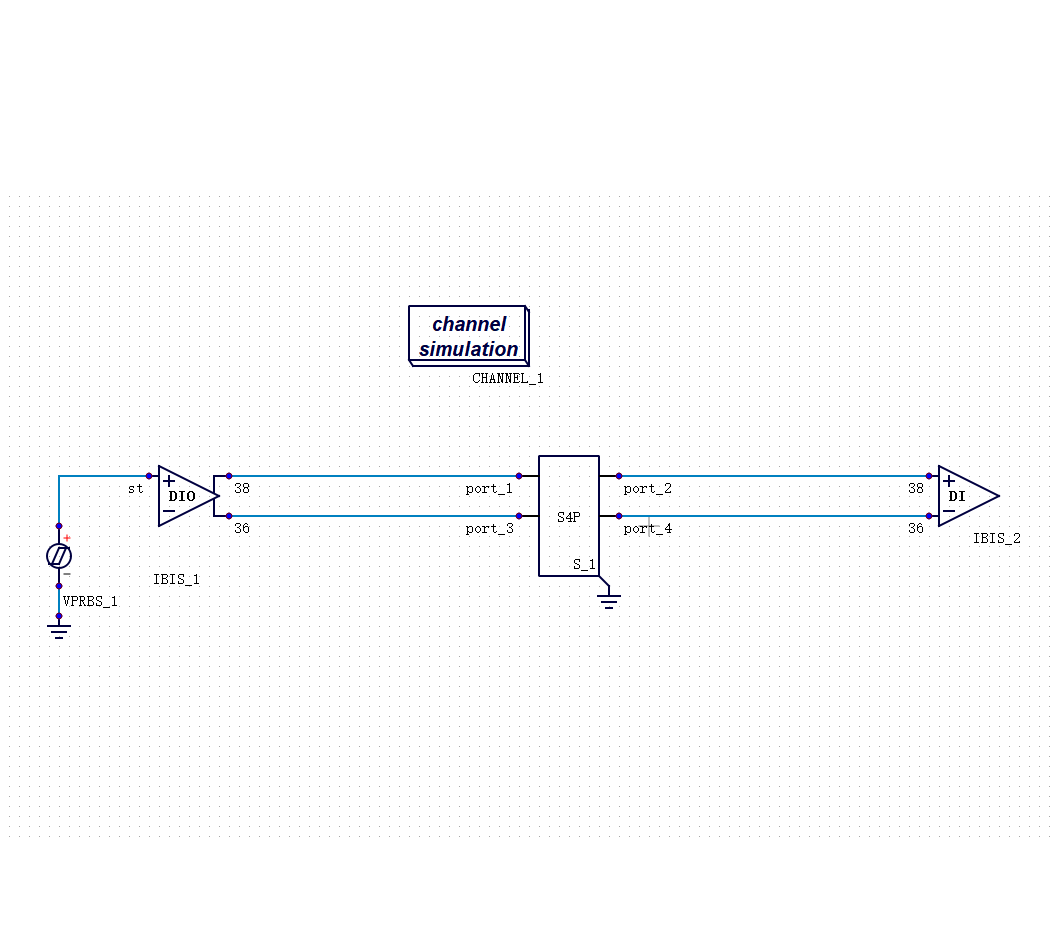
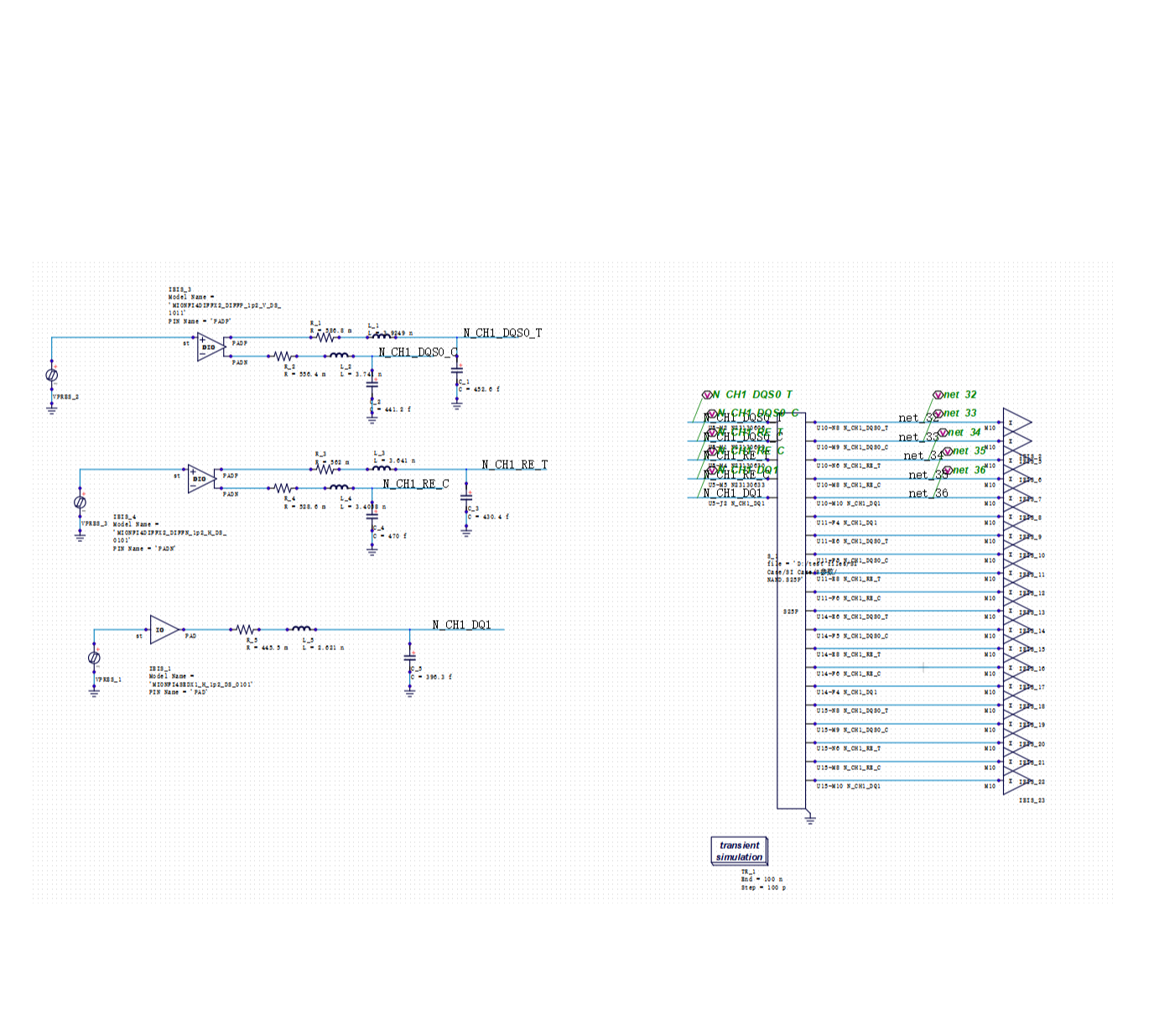
Transistor-Level IO Modeling: Provides full physical modeling for every device in the IO Buffer for DDR5/6, PCIe, and SerDes, enabling precise extraction of impedance, slew rate, and drive strength.
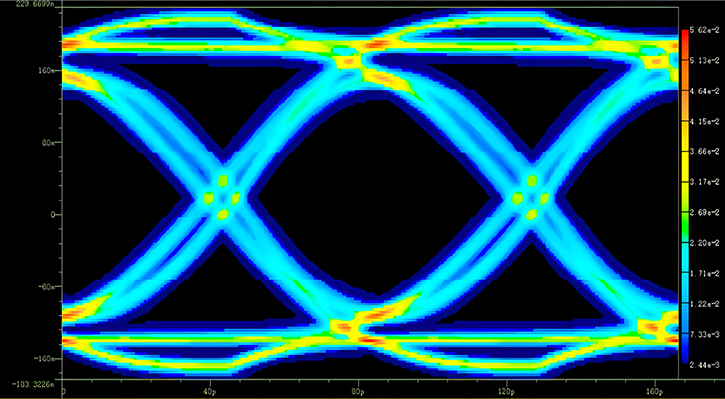
Full PVT Corner Timing: Supports complete corner matrices (Process, Voltage, Temperature) to ensure that high-speed PHY timing margins meet sign-off requirements under all extreme conditions.
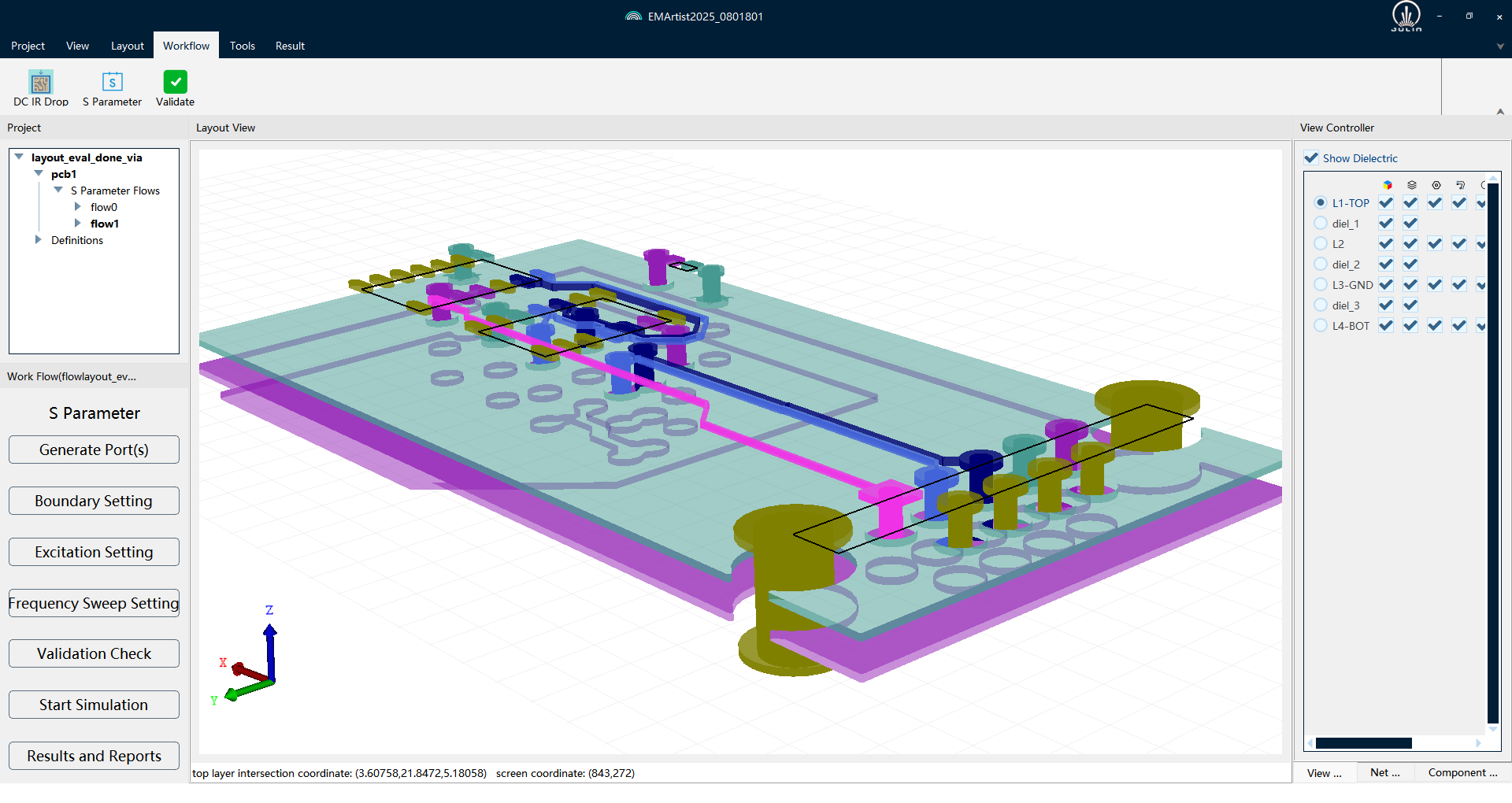
Enhanced S-Parameter Convergence: Optimized for Signal Integrity (SI) high-frequency scenarios with enhanced stability and convergence for S-parameters and transmission line dielectric loss.
-
 Automated IP Verification
Parametric Sweep, coupled with built-in Measurement functions, enables fully automated batch verification and result extraction across a vast range of parameters under diverse PVT Corners. The integrated Monte-Carlo statistical analysis accurately quantifies the impact of process variations on key IP performance metrics (such as gain, bandwidth, settling time, and noise), facilitating an automated leap from single-point simulation to comprehensive coverage.
-
 SiC & GaN Power Electronics Simulation
Natively compatible with Level 90/91 models for power electronics scenarios, it supports transistor-level high-precision simulation for various topologies, including AC-DC (PFC rectifiers, LLC resonant converters), DC-DC (Buck/Boost/Flyback) converters, and motor drive circuits. It fully replicates the dynamic characteristics of SiC/GaN devices under extreme operating conditions—providing a closed-loop accuracy system from device to system for third-generation semiconductor applications in new energy vehicles, industrial power supplies, and photovoltaic inverters.
-
 Ecosystem Compatibility and Operating Environment
Deeply adapted to mainstream industry SPICE netlist formats and syntax specifications, it ensures seamless integration with existing design workflows. It supports integration into mainstream EDA toolchains via standard interfaces and is compatible with both Linux (Red Hat Enterprise Linux) and Windows 10 operating environments.

-
Communication Industry
The 5G/6G era demands higher-speed interconnects and ultra-broadband networks. The Julin EM simulation platform enables engineers to evaluate signal integrity issues early in chip, package, and PCB design, ensuring stable and reliable high-speed links.

-
Big Data Center GPU Industry
Large-scale computing and data centers impose stringent requirements on high-speed interconnects and low-noise power networks. The Julin EM simulation platform helps optimize power distribution networks, reduce noise, and enhance throughput and system stability.

-
Automotive Industry
Intelligent and electric vehicles rely on high-speed buses and power electronics modules, with stringent PI and EMC requirements. The Julin EM simulation platform supports full-vehicle SI/PI analysis, ensuring the reliability and safety of automotive electronic systems.

-
Product
Details -
Featured
Advantages -
Product
Value -
Related
Industries