












XSR Technology: The Innovative Force Driving Inter-Chip Interconnects
-
 2025.06.04
I. Definition of XSR Technology
XSR (Extra Short Reach) is an inter-chip interconnect technology specifically designed for ultra-short-distance connections between dies. It connects multiple chips via network-on-chip (NoC) or interposer interconnects, playing a crucial role in the design of multi-chip computing architectures.
II. Advantages of XSR Technology
Low Power Consumption and Small Footprint: Due to the extremely short transmission distance, signal loss is minimal, resulting in low power consumption. It occupies less than one-third of the area of traditional SerDes on a chip, freeing up valuable silicon area for other functional modules and enhancing integration and functional density.
High Rate and High Bandwidth: Existing die-to-die interconnect speeds based on XSR technology are evolving from 50Gbps to 100Gbps and even higher rates, meeting the rapid transmission demands of massive data and providing strong support for high-performance computing (HPC) and data processing.
Flexible Communication Protocols: Communication protocols can be flexibly configured based on different application scenarios and requirements, offering high versatility and adaptability to diverse inter-chip communication demands.
No Complex Equalization Algorithms Required: Traditional long-distance SerDes technologies require complex feed-forward equalization (FFE), decision feedback equalization (DFE), or continuous-time linear equalization (CTLE) circuits to address signal attenuation and interference during high-speed transmission. Thanks to short distances and minimal signal degradation, XSR technology bypasses these complex equalization algorithms, reducing system complexity and cost.
Excellent Signal Integrity: Designed with a strong focus on signal integrity, XSR ensures high signal quality, reduces bit error rates (BER), and improves system reliability.
III. Drivers Behind XSR Technology
Meeting the Demand for High-Performance Interconnects: With the development of artificial intelligence, big data, and high-performance computing, the volume of data processed by chips has grown exponentially, continuously raising communication bandwidth and speed requirements. Traditional interconnects struggle to meet these demands, giving rise to XSR technology to enhance overall system performance.
Adapting to Advanced Packaging Evolution: Chip packaging continues to advance toward miniaturization and high density, such as 2.5D and 3D packaging. In these form factors, chips are situated in close proximity, a advantage traditional interconnects fail to fully leverage. XSR is tailored for ultra-short-reach die-to-die links, adapting to shrinking package sizes to achieve higher bandwidth and lower power within limited spaces.
Overcoming Limitations of Traditional Interconnects: Traditional options suffer from high power consumption and high latency. XSR utilizes differential serial architectures and optimized signal processing algorithms to guarantee high-speed transmission while drastically reducing power and latency.
IV. Future Trends of XSR Technology
Continuous Speed Escalation: XSR speeds are scaling from 50Gbps to 100Gbps and beyond, with future increases anticipated to match growing data throughput demands.
Deep Integration with Advanced Packaging: As 2.5D and 3D packaging mature, XSR will deeply integrate with these technologies to provide efficient, reliable inter-chip solutions, driving higher integration levels.
Synergistic Development with Other Interconnects: Alongside standards like UCIe, XSR will co-exist and complement other technologies to satisfy multi-scenario communication requirements.
Advancement of Standardization: Standards like CEI-112G-XSR are continually maturing, establishing a unified, standardized framework for the industry as widespread adoption accelerates.
V. Application Scenarios of XSR Technology
High-Performance Computing (HPC): In data centers and supercomputers, massive data exchange occurs between CPUs, GPUs, FPGAs, and ASICs. XSR enables high-speed inter-chip communication to boost computing efficiency and processing speed.
Artificial Intelligence and Machine Learning: AI training and inference require rapid processing of massive datasets. XSR provides high-speed channels for neural network processors and AI accelerators to accelerate model training and inference.
Network Communications: In 5G base stations and optical modules, high-speed inter-chip links are vital for high-throughput, low-latency transmission.
Consumer Electronics: In smartphones and tablets, surging graphics and AI demands turn chip interconnect bandwidth into a performance bottleneck, which XSR helps alleviate to improve user experience.
Automotive Electronics: Autonomous driving and smart vehicle systems require massive sensor and image data processing. XSR supports high-speed data transmission among automotive chips to empower intelligent driving development.
VI. Simulating XSR Circuits Using SIDesigner
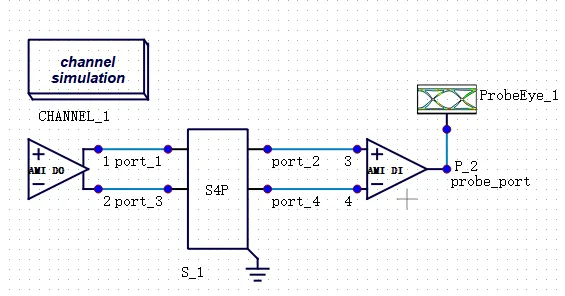
Engineers can construct XSR simulation circuits using Julin Technology’s simulation software, SIDesigner. The schematic is shown below:
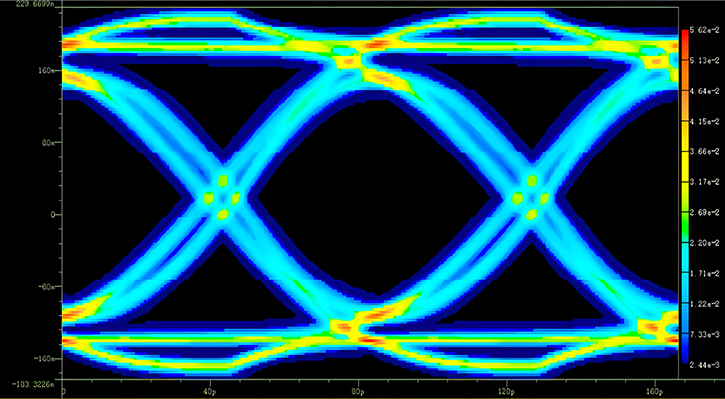
The simulation results are as follows:
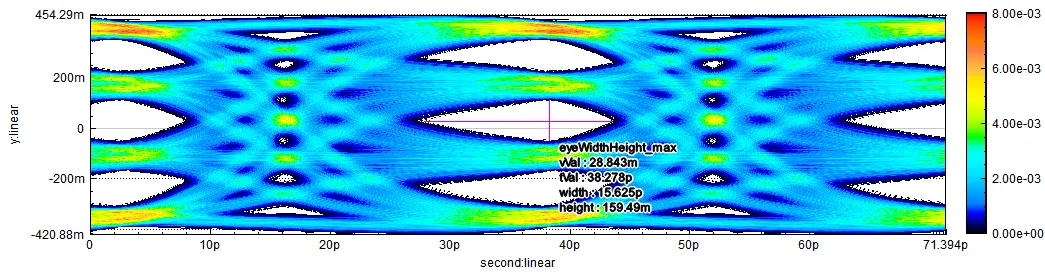
By leveraging this platform, engineers can perform comprehensive system performance evaluations, optimize reliability and stability, and accelerate the product research, development, and iteration lifecycle.


Recommended
-
 The Two Structural Barriers in Power Electronics Simulation: Model Portability and Signoff Accuracy
 2026.07.02
 -
 Optimizing DDR Signal Integrity: Using DFQ Sensitivity Analysis (S1/ST) to Identify High-Leverage Design Variables
2026.06.10
Optimizing DDR Signal Integrity: Using DFQ Sensitivity Analysis (S1/ST) to Identify High-Leverage Design Variables
2026.06.10 -
 Efficiency Bottleneck in DDR5 Multi-Corner Timing Verification: PDA Analysis Methods
2026.05.27
Efficiency Bottleneck in DDR5 Multi-Corner Timing Verification: PDA Analysis Methods
2026.05.27 -
 The Mass Production Yield Trap After DDR5 SI Sign-off: Using DFQ to Predict Defect Rates Early
2026.05.07
The Mass Production Yield Trap After DDR5 SI Sign-off: Using DFQ to Predict Defect Rates Early
2026.05.07